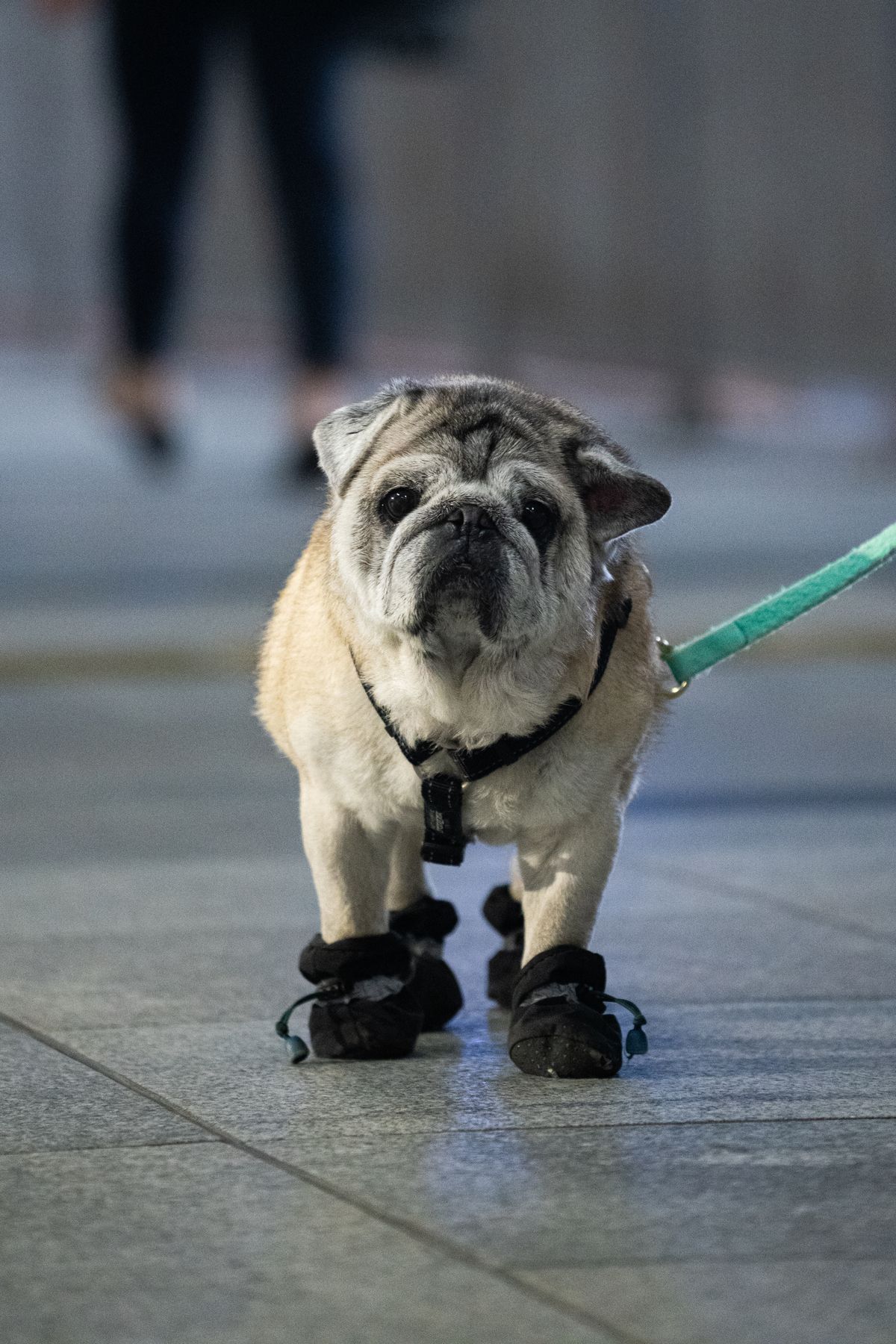
Senior Dog Wheezing: Age-Related Causes

Wheezing in an older dog can stem from the same general causes as in a younger dog, but the relative likelihood shifts with age. Weight gain, which tends to accumulate gradually as activity naturally decreases in senior years, narrows the airway further and is a common contributing factor to new or worsening wheezing that wasn't present when the dog was younger and leaner.
Heart disease, more prevalent in senior dogs, can also produce wheezing as part of a broader pattern of breathing changes as fluid pressure affects the airways. Laryngeal paralysis, seen predominantly in older large-breed dogs, can produce a wheezing or raspy quality to breathing, particularly noticeable with exertion or excitement. Chronic bronchitis, a long-term inflammatory airway condition more common in older dogs, is another possible cause, often producing a combination of wheezing and a chronic cough together.
New allergies can technically develop at any age, so it's not accurate to rule this out entirely in a senior dog, but a new wheeze in an older dog is statistically more likely to relate to one of the age-related structural or cardiac causes above than a sudden new environmental allergy.
What to do: New or worsening wheezing in a senior dog warrants a vet visit that includes listening to the heart and lungs, evaluating weight, and considering the range of age-related causes above rather than defaulting to an allergy assumption. Addressing contributing weight gain, when present, often meaningfully improves symptoms alongside whatever other treatment is needed for the underlying cause.
For the broader picture on noisy breathing changes in senior dogs generally, here's more.
Still have questions?
Don't rely on Google if your pet is showing symptoms. Get a professional opinion in minutes.
Talk to a Vet Now